To say that a Camaïeu garment has a simple, clean story from point A to point B would be an industrial fantasy. Behind the logo, the reality is quite different: manufacturing circuits scattered internationally, a multitude of intermediaries, and a journey filled with steps that are rarely visible to the naked eye. The end of the journey is not only read on a label attached to the neckline but starts much earlier, far from the customer’s gaze.
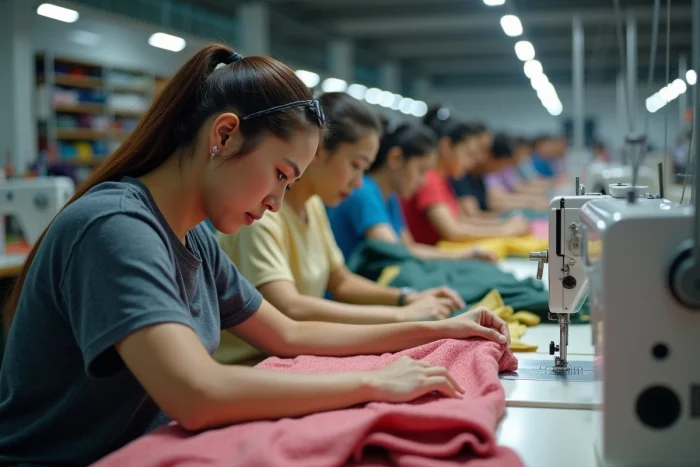
Over the years, the brand has structured itself around a dense network of subcontractors, primarily in Asia: Bangladesh, China, India, the list stretches like the kilometers that separate the workshops from each other. Each garment changes hands several times before arriving in stores. This organizational choice, dictated by the need to remain competitive, impacts every decision in the production process.
Before appearing on a rack, each piece undergoes checks, initially supervised by the manufacturers themselves. On paper, the chain seems controlled. In reality, total traceability remains rare. Between the creation of a new model and its arrival on the shelves, it can take anywhere from three weeks to three months, depending on the complexity or delivery issues.
Origins and identity of the Camaïeu brand: what its history reveals
The fate of Camaïeu is rooted in a textile land: Roubaix. The 1980s saw the brand born and establish itself on the scene of French women’s ready-to-wear. At that time, Jean Duforest, Dominique Debruyne, and Éric Vandendriessche had big dreams. The first stores opened in Lille, and then expansion accelerated, weaving the brand throughout France.
Camaïeu reached its peak with over 650 stores to its name, mostly in France, but also elsewhere in Europe. The numbers are dizzying: every week, a constant flow of customers enters the stores, attracted by the constantly renewed collections and the ability to meet demand, driven by formidable logistical efficiency.
However, growth does not protect against everything. The brand must contend with global competition, price pressure, and rapidly evolving consumer habits. The situation tightens: judicial recovery, liquidation, and management changes, Joannes Soenen, then Karine Renouil, ultimately failing to sustainably bring the ship back to shore.
the Style Papers article precisely details this journey between local ambition and global logics. It focuses on strategic choices, the tug-of-war between the French base and the necessity to outsource, and how Camaïeu faced the upheaval of an entire industry. The brand’s story carries the bitterness of trajectories disrupted by their own momentum and by the times.
Where are Camaïeu garments designed and manufactured today?
It is difficult to recognize in the current Camaïeu the accents of its beginnings in the North. The heart of production now beats thousands of kilometers away: Bangladesh has established itself as the cornerstone of garment manufacturing, followed by other Asian hubs. The reason? To face competition on costs, keep up with the ultra-pace of the market, and adjust to the demands of retail giants.
That said, the creative stage retains a French anchor. Near Lille, designers sketch silhouettes, develop themes, and adjust prototypes to stay in tune with the clientele of the Hexagon. Then comes the time for the handover: industrial manufacturing returns to Asian workshops, experienced in volume production.
There are, on the margins, exceptions. Small series, sometimes arising from local collaborations, for example with the layette manufacture or the Jean Ruiz workshop in Roanne, highlight a “made in France” that is more symbolic than substantial. These initiatives represent little in the overall flows but testify to an attempt to keep a foothold in the territory.
The current organization of the creation and manufacturing steps of Camaïeu can be summarized as follows:
- The creation of models and development mainly takes place in Lille
- The vast majority of production is organized in Bangladesh and other Asian countries
- Some limited series come from French partners like Jean Ruiz in Roanne or more specialized knit workshops
Starting in 2022, Karine Renouil, who took over as general manager, sought to highlight the French heritage in the brand’s communication. In reality, the overwhelming majority of collections remains driven by the search for low prices, responsiveness, and the art of never missing the trend that will hit in stores.
Between material choices and manufacturing processes: immersion in the production backstage
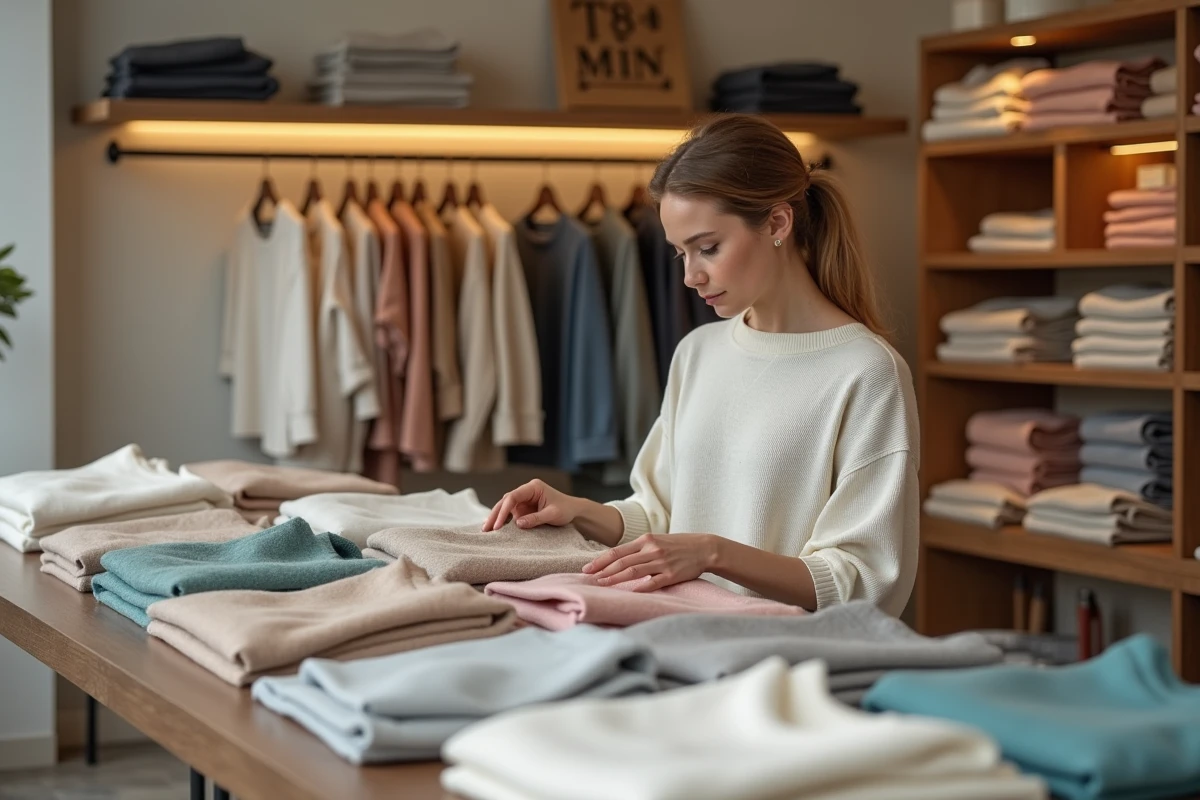
Everything starts with the choice of materials. Cotton, viscose, polyester, denim: the catalog changes with the moods of the global market and current priorities. Availability varies depending on the economic situation, tensions on raw materials, or even geopolitical events. Shortages of thread, rising freight costs, conflicts on the other side of the world, and deadlines can extend overnight.
The “fast fashion” organization requires agile suppliers: they produce quickly, in short series, and split orders to avoid accumulating unsold items. The goal remains constant: to adapt the pace to what buyers are looking for while limiting the risk of overstock.
To ensure a certain level of quality, checks are implemented at every stage: weaving control, seam verification, color analysis in the workshops, and then another check once the garments arrive in France, before hitting the shelves. The operation aims to detect problems as early as possible, even if monitoring remains partial in certain sectors.
The major ingredients of the Camaïeu manufacturing process can be detailed as follows:
- A selection of fabrics, cotton, viscose, polyester, denim, depending on the season or trend
- Production timelines that fluctuate according to international issues
- A double quality control, in the workshop and upon receipt in France
Behind the scenes, production resembles a continuously adjusted mechanism: pressures on costs, tight deadlines, and the need to respond to current trends without destabilizing the logistical apparatus. Camaïeu emphasizes the traceability of certain items, but transparent and exhaustive knowledge remains rare, both regarding the origin of materials and the exact list of partner workshops.
Ultimately, each Camaïeu garment bears the mark of its time: designed here, shaped there, it crosses seas, borders, and checkpoints before reaching a store. It is impossible not to question the meaning of this journey when one knows all that it conceals behind its seams.