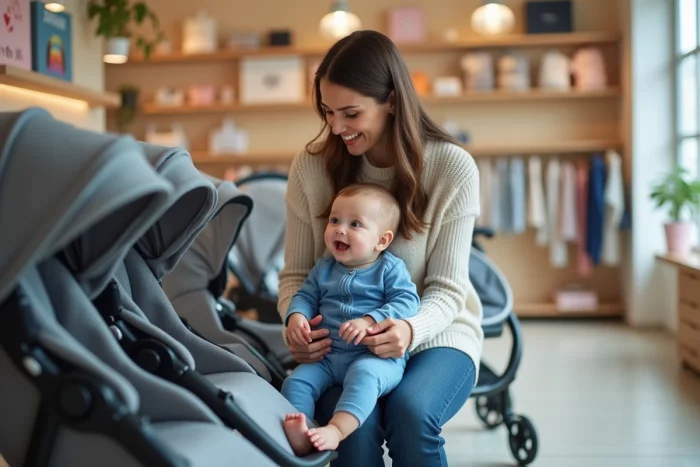
No European country regulates the entirety of baby accessories, despite a market dominated by “safety” labels and increasingly long shopping lists each year. Some essential equipment is not subject to any mandatory certification, while others, less essential, are strictly controlled.
Professional recommendations sometimes differ, creating difficult choices for parents. Between technological innovations and a return to basics, purchasing criteria are evolving rapidly, driven by vigilance regarding materials, durability, and adaptability to current lifestyles.
What criteria should be prioritized when choosing baby accessories in 2024?
Today, it’s impossible to navigate with just a glance: the offerings are abundant. To sort through baby equipment and accessories, start by questioning the actual usefulness of each item. Appearance should never take precedence over safety, material quality, or compliance with French standards. These three requirements form the foundation of any reasoned purchase. The NF and EN labels, or the mention “compliant with safety requirements,” are reliable indicators but do not exempt you from checking the composition in detail. Pay attention to the materials used: avoid problematic substances, prefer Oeko-Tex certified textiles or equivalents, and hypoallergenic materials that respect the delicate skin of little ones.
As days go by, practicality becomes paramount. An accessory that is unnecessarily complex or difficult to clean often ends up relegated to the back of a cupboard. Opt for adaptable equipment that can be disassembled without tools, easy to maintain, and suitable for your living spaces. In the city, compact and lightweight options are ideal; in the countryside, robustness and versatility take precedence. And what about the budget? Reliable options exist across all price ranges: there’s no need to succumb to flashy products. A tool like the buying guide offered by 123bebestar.com in the “123 Bébé Star – The baby blog” section proves invaluable for navigating between cost, quality, and marketing promises.
The growing demand for traceability is pushing manufacturers to reveal the origin, manufacturing processes, and responsible approach behind each product. In the face of enticing claims, take the time to consult verified reviews, listen to feedback from professionals or experienced parents, and compare different rankings or comparisons before making a decision. This vigilance will save you from many disappointments and guide your choices towards durable and appropriate accessories.
Focus on the essentials: safety, comfort, and practicality in daily life
Some equipment remains indispensable, starting with those that ensure the safety and comfort of the baby. The approved car seat, adjusted to the child’s morphology, weight, and age, is non-negotiable for trips. Never overlook the presence of an isofix system, a true barrier against careless handling.
For outings, the ideal stroller combines maneuverability, sturdiness, a lightweight frame, and an intuitive braking system. A spacious basket avoids unnecessary contortions, and a reclining backrest ensures peaceful naps while on the go. At home, invest in a stable and secure changing table, a firm and certified mattress, and textiles that are soft, hypoallergenic, and easy to wash. The changing bag deserves careful consideration: compartmentalized, it allows for quick access to daily essentials.
To ensure you don’t forget anything during your shopping, here are the categories of accessories that meet the baby’s needs while remaining practical:
- Hygiene products suitable: prioritize fragrance-free and alcohol-free formulas that are gentle on the skin.
- Baby clothing: choose natural materials that are easy to put on and wash.
- Baby registry: structure your choices based on frequency of use and durability over time.
Prevention also involves safety equipment: gates, night lights, baby monitors… From the first months, anticipate the child’s mobility. But avoid the rush for gadgets: each purchase should meet a concrete need, not a fleeting trend.

Organizing your purchases calmly: tips for creating a list tailored to your needs
The arrival of a baby should be prepared well before the big day. The baby registry deserves thought and planning. Start by identifying your actual needs: distinguish between essential items for sleep, feeding, hygiene, and safety, and those that fall under comfort or bonus. Avoid accumulation, and prioritize sturdiness and longevity.
To structure your preparations and gain clarity, group your purchases by category:
- meals and breastfeeding,
- care and hygiene products,
- appropriate furniture,
- diapers and changes,
- baby clothing,
- transportation (stroller, approved car seat).
Rely on reliable and up-to-date buying guides. Take the time to examine reviews, identify labels, compare prices, and the actual usefulness of each product. Evolving and adjustable accessories will become your best allies in supporting the child’s growth without multiplying unnecessary expenses. Consider each expense category: thoughtful organization prevents you from ending up with duplicates or superfluous items.
France applies strict standards in the field of childcare: demand certifications with every purchase. Always ask yourself if the item fits into your daily life and if it will accompany the child over time. Don’t let trends dictate your choices: a well-chosen piece of equipment means a lighter daily routine and a baby growing up in a safe, comfortable, and suitable environment. Sometimes, the best decision is to do less, but better. Who knows, maybe your streamlined and coherent list will become the model to follow in your circle?