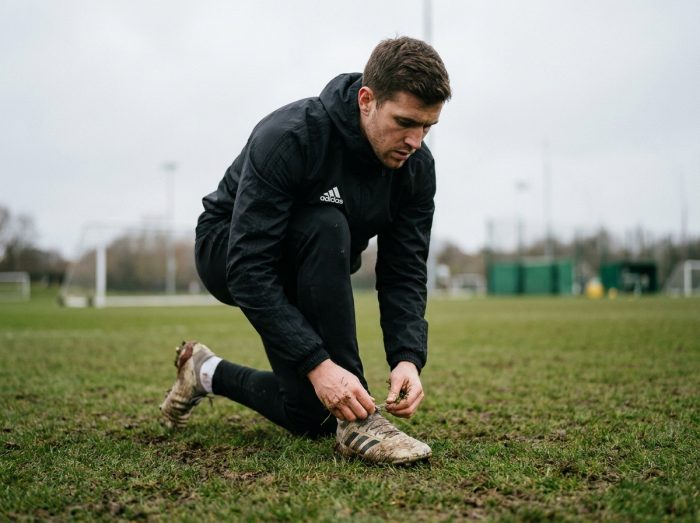
When you play football every week, the studs endure much more than those of an occasional player. Choosing a pair of adidas is not just about the range or color: the sole, the type of studs, and the durability of the upper material directly affect comfort over the months. Here’s how to make a sustainable choice suitable for regular play.
Accelerated wear of adidas studs with weekly use
Have you noticed that your studs lose their grip after a few months while the upper still seems in good condition? This is a common phenomenon among players who combine a match with one or two training sessions per week.
User feedback on adidas product pages shows that some F50 League SG models wear out within the first few months under intensive use. The coating and studs degrade faster than on ranges like the Copa, whose synthetic leather maintains its shape better over time.
The lesson is simple: a model designed for speed is not always designed for longevity. Before choosing adidas studs, you need to assess the abrasion resistance of the model, not just its ball touch qualities or lightness.
A good reflex: read reviews from players who specify their frequency of use. A five-star review posted after three matches is not worth as much as one from a player who has worn the pair for four months of regular training.

Hybrid SG or screwed SG: what type of sole for weekly play
The sole is the component that most influences your grip and safety. At adidas, there are two configurations for soft grounds: fully screwed SG and hybrid SG (molded + screwed).
Hybrid SG: versatility for variable terrains
Amateur players who play every week report that hybrid SG models reduce the need to own two pairs. The combination of molded and screwed studs allows you to switch from a muddy field to a slightly drier one without changing shoes.
The trade-off is real: grip on a very muddy field remains less aggressive than with fully screwed studs. On a simply damp field, the difference is minimal.
Screwed SG: reserved for deep fields
Classic SG studs, fully screwed, provide maximum penetration in waterlogged soils. Their advantage is clear in sustained rain or on poorly drained fields.
In weekly practice, they pose a problem: if you also play on moderately damp fields, you risk too much grip, which can cause joint stress at the knees and ankles.
- Hybrid SG: suitable for players alternating between soft and decent fields, without wanting two pairs
- Screwed SG: to be reserved for weeks when the field is consistently waterlogged
- FG (firm ground): the classic molded sole, ideal if your field remains dry to slightly damp all season
Local regulations on metal studs in amateur championships
Before investing in a pair of screwed studs, check your league’s rules. Several districts and regional leagues in France have updated their regulations regarding metal studs on certain categories of fields, particularly synthetic surfaces.
Some amateur championships outright ban aluminum studs on the latest generation artificial turf. Playing with non-compliant studs can lead to a match ban or even a sanction for the club.
Why is this point so rarely checked? Because many players buy their studs online without inquiring about local constraints. Contact your league or club before purchasing metal SG: a quick message is enough to avoid an unnecessary purchase.
Copa range or adidas Predator range: compared durability for regular use
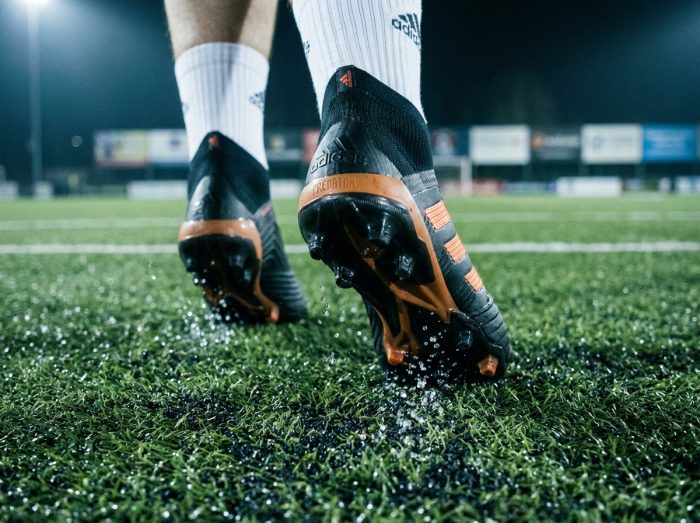
At adidas, the two ranges most frequently chosen by regular players are the Copa and the Predator. Their philosophy differs, as does their resistance to intensive use.
Copa: lasting support
The Copa prioritizes comfort and foot wrapping. Its thick synthetic leather withstands repeated friction better. For a player who has training sessions every week, the Copa maintains its shape and cushioning longer than speed-oriented ranges.
It suits profiles looking for a natural ball touch without sacrificing durability. The trade-off: it is slightly heavier than an F50 or an X.
Predator: control at the cost of wear
The Predator relies on textured zones to enhance control and spin on strikes. These raised elements wear down over time, especially if you play on abrasive surfaces like synthetic.
With weekly use, expect the lifespan of the texture to be shorter than that of the rest of the shoe. The upper remains functional, but the technical advantage gradually diminishes.
- Copa: better overall longevity, consistent comfort, natural touch
- Predator: technical advantage in the first weeks, faster wear of textures in intensive use
- F50: maximum lightness, but lower durability on the studs and coating
Finding your adidas studs at a football specialist
When you play every week, trying on your studs before purchase is an advantage. Specialized football shops allow you to compare fits, assess the width of the upper, and check heel support.
Footcenter, accessible via footcenter.fr, is one of the online players dedicated to the world of football. This type of specialized site generally offers a catalog focused on football shoes and equipment, making it easier to compare different adidas ranges without being overwhelmed by a multisport catalog. For a regular player, going through a specialist also provides access to models that are sometimes absent from major generalist stores.
The choice of adidas studs for weekly practice relies on three concrete considerations: the sole suited to your main field, the upper material’s resistance to repeated wear, and compliance with your championship’s rules. A well-chosen pair based on these criteria will last the season without unpleasant surprises.