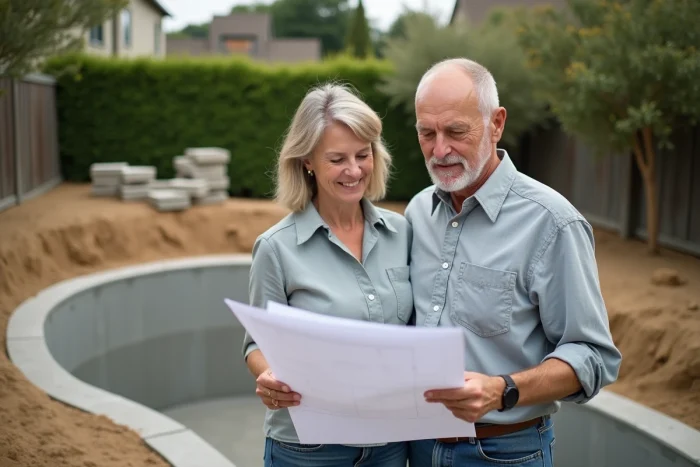
Building or renovating a pool rarely starts with the choice of material or shape. The first decision concerns the surface area of the pool, as this parameter influences administrative procedures, budget, and even the taxation of the project. Many homeowners discover these constraints too late, once the quote is signed.
Pool Surface and Regulatory Thresholds: The Choice That Precedes All Others
Have you noticed that some neighbors are installing very compact pools in their gardens? It’s not always a matter of space. Manufacturers and pool builders have observed a significant increase in mini-pools of less than 10 m² in recent years. The reason is both administrative and aesthetic.
A pool of less than 10 m², not covered by a fixed shelter, is exempt from prior work declaration in most municipalities. It also limits the impact on property tax and development tax. As soon as the surface exceeds this threshold, a prior declaration becomes mandatory, and beyond a certain level, a building permit is required.
In renovation, this criterion is equally important. If you plan to enlarge an existing pool or add a fixed shelter, you may potentially change regulatory categories. Before comparing quotes, check your municipality’s local urban planning plan: some areas impose minimum distances from property boundaries or prohibit in-ground pools in flood-prone areas.
To compare pool types and their technical implications, Maison Pro’s pool solutions allow for a quick visualization of the major construction families available on the French market.
Fiberglass Pool, Concrete, or Kit: Decide Based on Terrain and Use
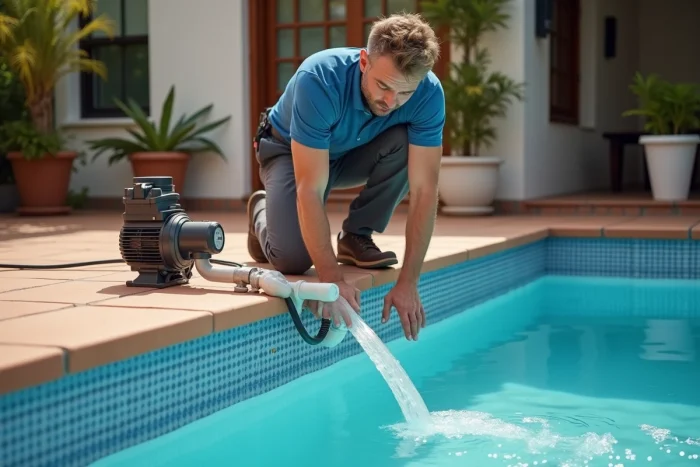
The choice between a fiberglass shell, a concrete structure, or a kit to assemble is not just a matter of price. It is primarily a question of terrain and long-term project.
Fiberglass Shell: Speed and Shape Constraints
The shell arrives molded from the factory, ready to install. The installation takes a few days once the excavation is completed. However, the shapes and dimensions are dictated by the manufacturer’s catalog. It is impossible to design a custom pool. The terrain must also allow access for a crane truck for installation.
A often underestimated advantage: the fiberglass shell limits waterproofing issues in the medium term, as the monobloc structure eliminates joints between elements.
Shotcrete or Poured Concrete: The Freedom of Shape Comes at a Cost
Concrete remains the reference for custom in-ground pools. Freeform, variable depth, integration of submerged beaches or benches: everything can be designed to the centimeter. The construction lasts several weeks and involves multiple trades (mason, waterproofing specialist, tiler).
The lining of the concrete pool must be replaced periodically. A liner is typically replaced after about ten years of use. A coating or tiling lasts longer but costs more to install and repair.
Kit Pool: A Compromise for Experienced DIYers
Kit pools (steel, aluminum, or modular panels) fall somewhere in between. They offer a wider range of dimensions than the shell, often with a budget lower than concrete. Self-construction is possible if you are skilled in excavation and hydraulic connections. Caution: a leveling or compaction error in the backfill can lead to structural deformations over time.
Treatment System and Water Discharge: A Strategic Criterion
Water treatment is no longer limited to the choice between chlorine, bromine, or salt. Local regulations on water discharge from drainage and filter cleaning have tightened in recent years. Some municipalities prohibit discharge into the stormwater system or ditches, and require connection to the sewer system or an appropriate dispersion device.
Why does this point change the game? Because the type of treatment chosen determines the chemical composition of the discharged water. A saltwater pool, for example, generates water with higher chloride levels than a pool treated with UV or ozone. If your municipality strictly regulates these discharges, the additional cost of an alternative treatment system may prove worthwhile given the discharge constraints.
Before validating a quote, inquire with the SPANC (Public Service for Non-Collective Sanitation) or the urban planning department of your town hall. This check takes a few minutes and can avoid costly compliance work later on.

Pool Renovation: Identifying Priority Areas
Renovating an existing pool requires a precise diagnosis before any intervention. Not all components age at the same rate.
- The lining (liner, coating, tiling) is the first element to inspect. Persistent stains, wrinkles, micro-cracks, or a loss of elasticity indicate that replacement is approaching.
- The hydraulic circuit (skimmers, return jets, pipes) may have invisible leaks. A drop in water level without an obvious explanation should raise an alarm.
- Filtration and pumps lose efficiency over time. Variable speed pumps consume significantly less energy than fixed-speed models, which often justifies their replacement even if the old equipment is still functioning.
- Safety devices (alarm, barrier, cover) must remain compliant with current standards. Outdated equipment does not provide protection and exposes you to legal liability in case of an accident.
In renovation, replacing the lining combined with modernizing the filtration system represents the best balance between investment and comfort gain. Adding a shelter or roller shutter at the same time reduces evaporation, limits soiling, and extends the swimming season.
The classic trap is to renovate the visible parts (coping, deck, lining) without checking the condition of the buried pipes. An undetected leak in a return pipe can negate the benefits of a new liner within months. A pressure test on the hydraulic network before starting work remains the most cost-effective precaution of the project.