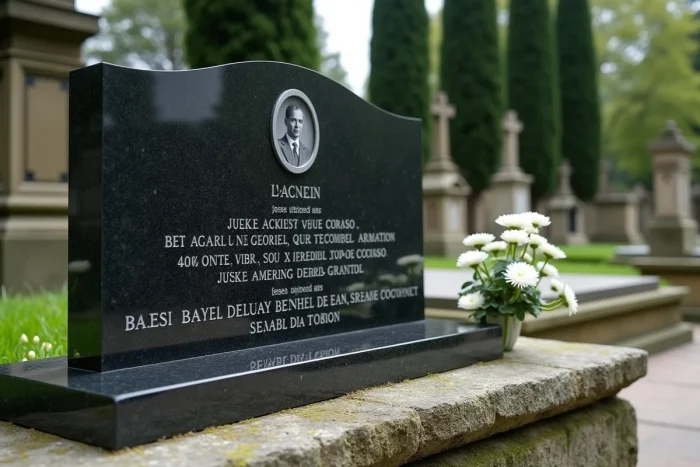
When looking to honor the memory of a loved one, the choice of material for the memorial plaque often raises questions. Acrylic stone and plexiglass frequently come up in searches, but these two terms refer to different technical realities that directly influence the longevity and visual appearance of the plaque.
Casted or extruded PMMA: the technical distinction that changes everything
Acrylic stone and plexiglass belong to the same chemical family, PMMA (polymethyl methacrylate). The difference lies in the manufacturing process. Have you ever noticed that some plaques retain their shine for years while others yellow within a few seasons? This discrepancy often stems from that.
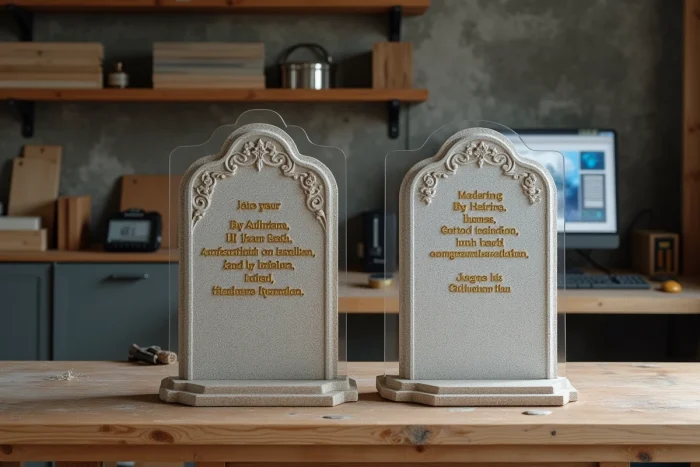
Casted PMMA, used for acrylic stone, is made by pouring liquid resin into a mold. This process produces a denser, more homogeneous material, with better UV resistance. Plexiglass, in its extruded version, goes through a faster industrial process: the material is pushed through a die. The result is a more affordable panel, but slightly less stable against weather conditions.
Some manufacturers use high-end cast PMMA with state-of-the-art anti-UV treatments, which limits the yellowing observed on the first plexiglass plaques from the 2000s. When comparing two quotes, the question to ask the manufacturer concerns the type of PMMA: cast or extruded.
To delve deeper into this distinction, the dedicated comparison of memorial plaques in acrylic stone or plexiglass details the specific characteristics of each process.
Weather resistance: outdoor memorial plaque, what ages poorly
A memorial plaque is constantly exposed to sunlight, rain, and frost. This context is more aggressive than a photo frame placed on a shelf. The material must withstand without regular maintenance, as visits to the cemetery are often spaced out.
Acrylic stone against the climate
Casted PMMA acrylic stone handles temperature fluctuations well. Its density makes it less susceptible to micro-scratches caused by wind and dust. Yellowing remains limited on UV-treated versions, even after several years of direct exposure.
Specialized manufacturers like Phénix offer guarantees on color retention and transparency, linked to the combination of cast PMMA and prints protected by UV varnish.
Extruded plexiglass in real conditions
Extruded plexiglass may show signs of wear sooner. Gradual opacification and micro-cracks on the surface sometimes appear after a few years, especially in regions with strong sunlight or harsh winters. Cleaning with an abrasive product accelerates the process.
A soft cloth and soapy water are sufficient for the maintenance of both materials. Solvents and window cleaning products should be avoided.
Customization and engraving: what each material really allows
Customization is often the decisive criterion. Photo of the deceased, engraved text, symbolic pattern: the possibilities vary depending on the chosen medium.
On both acrylic stone and plexiglass, UV printing offers detailed rendering of photos and colors. This technique deposits ink directly onto the surface and then fixes it by exposure to ultraviolet light. The result is sharp, including for portraits and landscapes.
Laser engraving also works on both materials. It produces a sober finish, often white or frosted, suitable for texts and simple patterns. On denser acrylic stone, the contrast obtained is generally more pronounced.
Why does this choice between printing and engraving matter so much? Because a memorial plaque personalized with a photo ages differently depending on the technique used. Here are the criteria to compare when placing an order:
- The type of printing (UV or sublimation) and the presence of a protective varnish on the printed layer
- The possibility of combining laser engraving and color printing on the same plaque, allowing for a sober text alongside a photo medallion
- The available shape: rectangle, heart, oval, or custom cut, as PMMA can be easily cut with a laser regardless of its version
Price and quality-durability ratio: arbitrate without overpaying
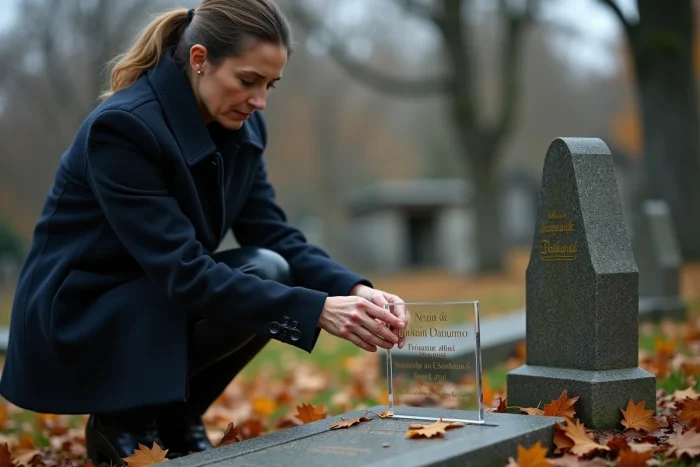
Acrylic stone generally costs more than extruded plexiglass. This gap reflects the quality of cast PMMA and the surface treatments applied. Before comparing two quotes, ensure that the services are equivalent.
A low price sometimes conceals thin extruded PMMA, without anti-UV treatment, with an unprotected print. Conversely, a high price guarantees nothing if the manufacturer does not specify the material composition.
Here’s what to pay attention to in a memorial plaque quote:
- The thickness of the PMMA: a plaque that is too thin appears fragile and vibrates in the wind
- The anti-yellowing guarantee, which reflects the manufacturer’s confidence in their product
- The type of fixing provided (feet, easel, adhesive), as poor fixing exposes the plaque to falls
- The explicit mention “cast PMMA” or “acrylic stone” in the product description
Granite, marble, or bronze remain alternatives for those who prefer a mineral or metallic material. Each has its constraints: granite is heavy and limits photo customization, bronze requires maintenance against oxidation, and marble can stain.
Between acrylic stone and plexiglass, the choice rests on three concrete parameters: the available budget, the desired level of customization, and the climatic exposure of the grave. A plaque in cast PMMA with UV varnish and manufacturer warranty remains the most reliable compromise for a lasting tribute without complex maintenance.