A three-degree error in a temperature forecast can be enough to skew a planting schedule or cause yield losses. Generalist tools often show significant discrepancies with the reality of the fields, while specialized solutions take into account topography, soil type, and local microclimates.
Access to tailored weather data transforms crop management, reduces risks associated with uncertainties, and promotes more precise intervention planning. The use of personalized agricultural forecasts is increasingly becoming a strategic lever to anticipate and optimize each stage of the growing cycle.
Why does agricultural weather directly influence your yields?
Weather sets the daily rhythm for farmers. Precipitation, temperatures, humidity, dew, wind speed: each parameter affects decisions, from choosing the right time to sow to organizing the harvest. The slightest climatic disturbance can disrupt the planned strategy. An unexpected cold snap, a summer that is too dry, a sudden and heavy rain: all these events reshuffle the cards and weigh heavily on the season’s outcome.
Reliable agricultural weather forecasts change the game. They allow for better organization, adjustment of irrigation, reduction of unnecessary phytosanitary interventions, and seizing the right window of action. In the face of the growing uncertainty of weather phenomena, amplified by climate change, precision agriculture takes over. Having access to personalized, updated weather information is a real asset to enhance the resilience of one’s farm.
Here’s how this data is concretely integrated into decision-making:
- Plan fieldwork according to the expected conditions to limit risks.
- Adapt each intervention using decision support tools (DST) that respond to changing weather.
- Manage resources more finely: water, inputs, labor time, for a reasoned and sustainable operation.
The heterogeneity of soils, the diversity of microclimates, and the specificity of technical routes necessitate going beyond standardized weather. Farmers, faced with uncertainty, now rely on high-resolution localized data. The impact of reliable agricultural weather forecasts is measurable in the field: more agility, fewer unnecessary risks, and crops that improve in performance.
What tools and sources should you prioritize to obtain reliable weather forecasts tailored to your farm?
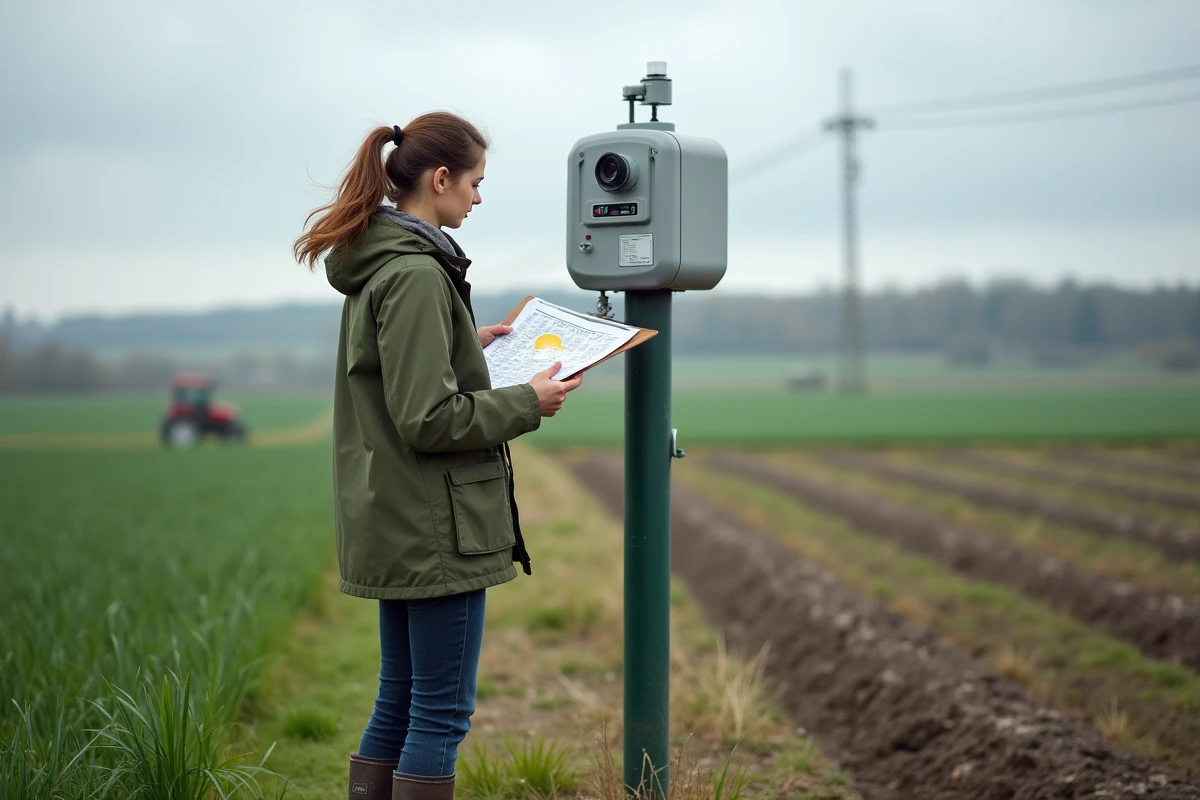
The quality of weather forecasts for agriculture comes from cross-referencing different sources and tools designed for the realities of the field. Installing a connected weather station on your farm provides precise and continuous measurements: temperature, humidity, rainfall, wind speed… These readings create a custom historical record, essential for anticipating risky periods and understanding the specifics of each plot.
In addition to these devices, there are weather applications dedicated to agricultural professionals. Their strength? They compile data from forecasting models with local observations and generate targeted alerts: frost risk, heavy rains, announced drought. Some go further by integrating decision support tools (DST) that suggest, based on expected weather, the optimal window for sowing, fertilizing, or irrigating.
Three main categories of tools stand out:
- Connected weather stations: for precise measurements directly on the fields.
- Agricultural weather applications: personalized alerts, advice tailored to the farm profile.
- Weather forecast websites: for a quick overview, summarizing local and regional trends.
The combination of these technologies transforms the approach to climatic uncertainties. Specialized weather forecasting services for agriculture become true partners, allowing for more serene and precise planning of each intervention.
Practical tips for integrating agricultural weather into your crop planning
Weather is never just a backdrop; it is the daily compass for the farmer. Knowing how to read and interpret agricultural weather forecasts to organize sowing, treatments, or irrigation is to adapt to the volatility of climatic uncertainties. Taking the time each morning to analyze weather data (temperature, humidity, sky conditions), then cross-referencing it with recommendations from decision support tools, gives each intervention its rightful place and timing.
Adjust the agricultural work schedule
Here are some concrete adjustments to consider based on the weather:
- Postpone sowing or pruning if frost or excessive humidity risks are reported.
- Shift a treatment considering the temperature and humidity levels.
- Schedule irrigation based on rainfall forecasts to minimize water stress and conserve water.
Relying on reliable DST helps prioritize tasks, especially when multiple constraints overlap. Considering weather information then becomes a reflex to anticipate risky periods and refine resource management. At every stage, from choosing the variety to harvesting, having reliable forecasts secures yield and limits unpleasant surprises. Ultimately, it’s an entire profession that gains a safety net, so that weather is no longer an unpredictable adversary, but an ally you can count on.