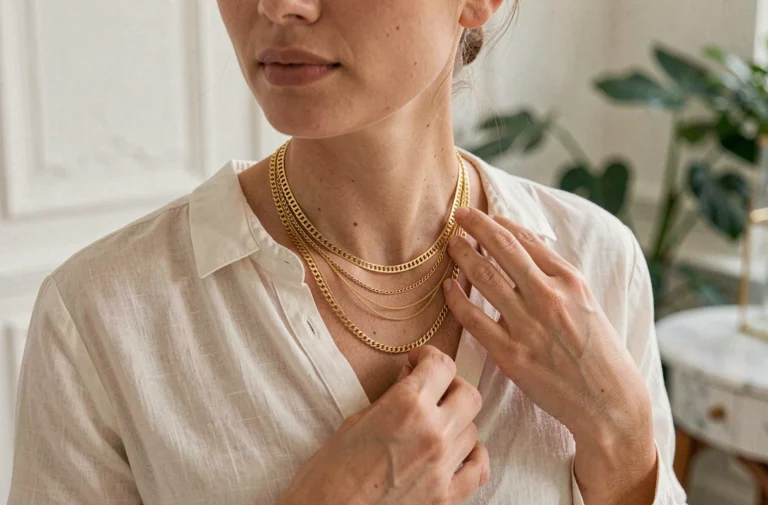
Some bracelet materials are incompatible with acidic sweat, causing a rapid alteration in their appearance. The advertised sizes can sometimes vary from one manufacturer to another, making online choices risky without prior verification.
Wearing habits differ according to professional environments, and certain bracelet combinations can disrupt the balance of an outfit. An overly bulky or poorly fitted model draws attention for the wrong reasons, while a mistake regarding the material can lead to discomfort or allergies.
Essential criteria for choosing a men’s bracelet
Choosing a men’s bracelet requires paying attention to several details that make all the difference. First and foremost, you need to know the exact wrist size. A well-fitted piece highlights the line of the arm, while an overly loose model gives a careless look and a bracelet that is too tight can become uncomfortable in daily life. The vast majority of men’s wrists range from 18 to 21 cm, but each body type has its specifics. To ensure a comfortable fit, all you need is a measuring tape: measure at the bone of the wrist, then add one centimeter for ease. This simple gesture directly influences the bracelet’s appearance.
The chosen material determines not only the look but also the durability and symbolic impact of the jewelry. Leather, steel, gold, natural stones, wood, or ceramic: each option has its particularities. Leather, for example, embodies both robustness and elegance, while steel evokes solidity. Natural stones attract for their character and sometimes the energetic values they convey. Some rare materials, like elephant hair, even require a CITES certificate ensuring a traceable and ethical origin.
The choice is further refined according to personality and lifestyle. Those who live life at a fast pace or prefer simplicity will lean towards discreet, fine bracelets that are practical for everyday wear. Others, fashion enthusiasts or lovers of unique items, do not hesitate to layer several pieces or to dare contrasts. Practicality must also be considered: some bracelets are more sensitive to water or chemical aggression, while others withstand intensive use without faltering.
For those looking to explore different options, the guide to choosing a cord bracelet details the advantages of a modular model that adapts to all body types and styles. Wearing a men’s piece of jewelry is never trivial: it reveals a part of oneself, affirms one’s identity, or offers a strong symbol.
What materials and styles to favor according to your personality and desires?
Choosing a men’s bracelet is not a trivial matter. Behind each material lies an intention, sometimes even a stance. Leather appeals to those who appreciate a subtle blend of strength and refinement. It ages well, molds to the skin, and absorbs the history of its wearer. Stainless steel, with its ability to withstand shocks and the trials of daily life, attracts pragmatic men who value the solidity and longevity of their jewelry.
For those who want to make a style statement, the natural stone bracelet stands out. Whether it’s tiger’s eye, onyx, jasper, or turquoise, each stone has its own symbolism, sought after for its virtues or simply for the story it tells. In the world of men’s jewelry, these beads are more than an accessory: they embody a sensitivity, an almost spiritual dimension for some lithotherapy enthusiasts.
The variety of styles allows for all desires. A silver or steel bracelet, fine and discreet, easily slips under a sleeve. More massive models, like cuffs or power bracelets, structure the silhouette and assert presence. Braided bracelets made of fabric or rope evoke a desire for escape, a wandering spirit. For unique materials like elephant hair, horsehair, or precious wood, a responsible approach is essential, and a CITES certificate may be necessary.
Selecting a men’s bracelet goes far beyond mere taste. It’s a way to engage in dialogue with oneself, to play with one’s image, to display values. A piece of jewelry sometimes speaks louder than a thousand words.
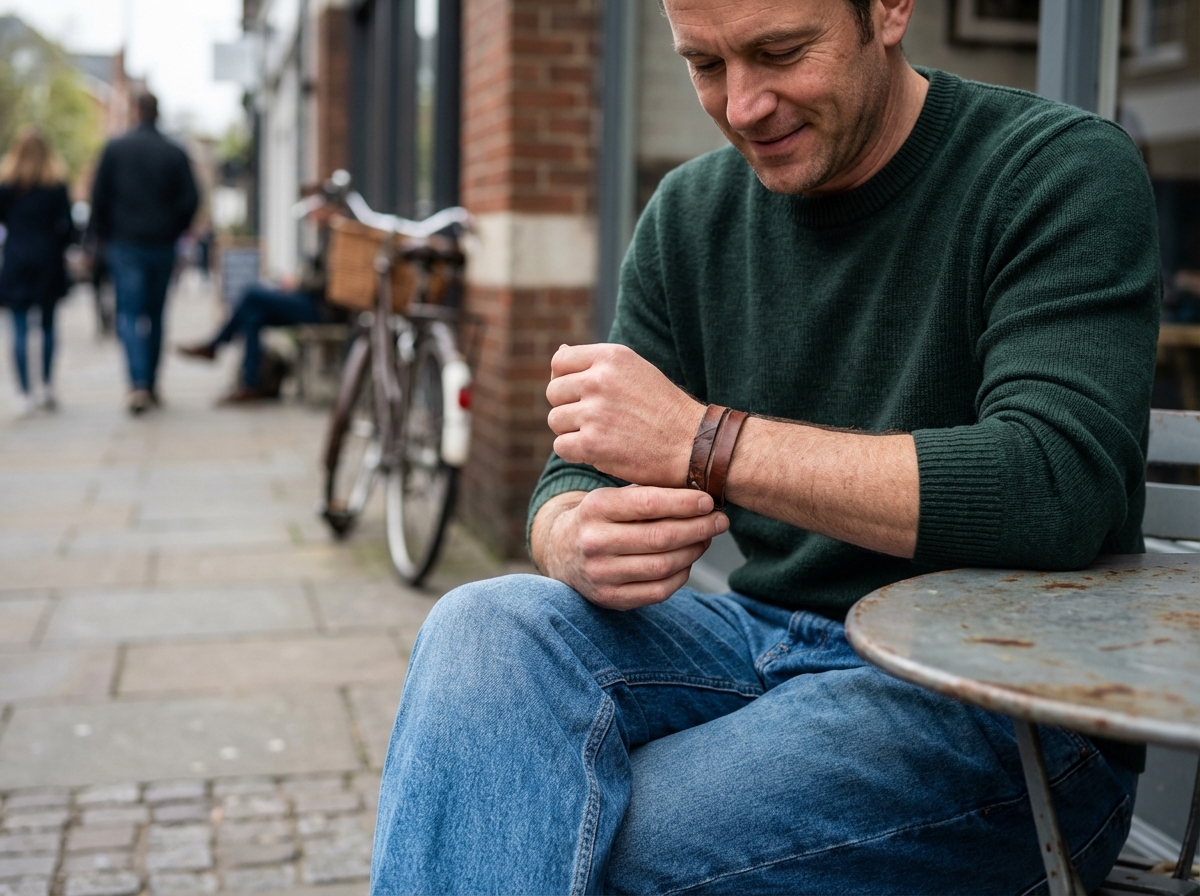
Measuring your wrist and wearing your bracelet with elegance: tips to know
To achieve an ideal fit, a flexible measuring tape remains your best ally. Simply wrap it loosely around the area where the men’s bracelet will be worn, generally just below the wrist bone. Note the measurement, then add between one and two centimeters to ensure comfort and freedom of movement. For a slim wrist, a size of 18 cm often works very well. Wider wrists may prefer 20 or 21 cm, sometimes a bit more. This step conditions the final look: a bracelet that is too loose slips, while one that is too tight marks the skin and can become bothersome.
Creating a harmonious combination of men’s bracelets requires a subtle balance. Here are some tips for successful layering:
- Vary materials and textures, but remain consistent with colors to avoid a patchwork effect.
- Pair a leather bracelet with an elegant watch for a classic and polished look.
- Dare to mix a natural stone bracelet with steel or rope models to add depth to the composition.
- Avoid exceeding two or three bracelets per wrist to maintain lightness and avoid excessive accumulation.
A quality bracelet deserves some care. Leather does not tolerate water, chemicals should be avoided, while natural stones can be cleaned with a soft cloth. Some enthusiasts purify their stones in moonlight or on a bed of quartz to preserve their shine. Taking care of your accessories also means respecting what they represent, an elegance expressed in restraint, in the precision of detail.
On the wrist, each bracelet tells a story, sometimes discreet, sometimes bold. The next time you put yours on, ask yourself: what does it say about you today?